
Acid–base balance
What should be the pH of urine, saliva, and blood in the body
The acid–base balance pH is the ratio of acids and bases in the human body. Acidity depends on the amount of positive hydrogen ions (H+) and negative hydroxyl groups (OH-).
Many people are interested in the question of which pH in the body is correct, how to change it, and whether it is possible to restore balance with the help of food. Which foods are more beneficial, acidic or alkaline?
What pH value is considered normal?
In healthy individuals, the pH value of saliva or urine usually fluctuates around 7. The optimal pH value of blood, lymph, and cerebrospinal fluid in a healthy body is approximately 7.365.
Numerous buffer mechanisms in the body are aimed at maintaining this balance. Special attention must be paid to the pH value of 7.4 in key body systems, especially in the blood. Even minor deviations can cause changes in the structure of enzymes circulating in the blood plasma, directly affecting the efficiency of all biological processes.
If the pH value of the blood shifts toward increased acidity, the absorption and consequently the transport of oxygen by hemoglobin is significantly reduced. The consequences of strongly exceeding the allowable pH limits are unimaginable. Therefore, the organism strongly strives to maintain a stable pH value in the blood plasma, which is also reflected in the pH values of saliva and urine, which can be easily measured.
What pH level is needed for the organism?
On the pH scale, which measures acidity or alkalinity, values range from 0 to 14.
- 0.0–6.9 – acidic
- 7.0 – neutral
- 7.1–14.0 – alkaline
Between these numbers there is a big difference, as each change of one unit increases or decreases the acid concentration by 10 times. For example, the acid concentration at pH=2 is 100 times higher than at pH=4 (10x10). Different organs and fluids in our body have different pH values. For example, the stomach has an increased amount of acid with which food is processed. The pH of the stomach is very acidic and ranges between 1.2 and 3.5.
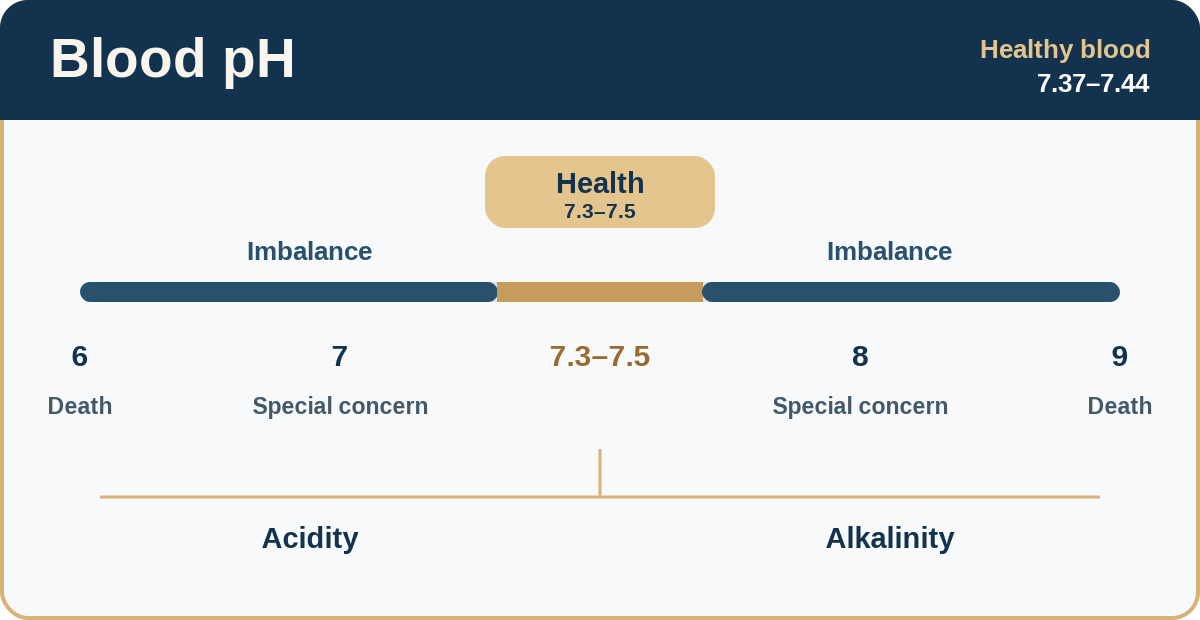
The pH of the blood is strictly regulated by the body within a very narrow range of 7.35–7.45, which means that our blood is slightly basic. After all, even a very small change in the acid–base balance of the blood can be fatal, which usually happens under the influence of serious diseases and is completely unrelated to diet.
To maintain homeostasis and the correct pH value of the blood, the body takes substances even from the brain and bones, and continuously removes all unnecessary substances through urine, for which it uses a special complex mechanism.
What pH level is needed for the organism?
 Enlarge image ↗
Healthy blood: 7.37–7.44
- pH 6
- Death
- pH 7
- Special concern
- pH 7.3–7.5
- Health
- pH 8
- Special concern
- pH 9
- Death
Acidity ← → Alkalinity
Urinary pH values throughout the day show significant deviations. These deviations indicate that the body has balanced the blood pH at a certain moment by excreting excess substances (acids or bases) through urine.
Everything in the body is interconnected. High acidity in the stomach is essential for the digestion of proteins and the destruction of incoming microorganisms. Bile acts as an emulsifier for fats, meaning it helps break down and absorb fats in the intestine. The pancreas secretes a basic fluid called pancreatic juice, which contains bicarbonate ions to neutralize the acidic content coming from the stomach into the duodenum. In the large intestine, the pH reaches a value of 5.5, while in the small intestine it becomes basic (pH = 7.2-7.5). Without this, acid would cause ulcers.
Insufficient stomach acid must be treated as a priority. Insufficiency may be associated with gastritis, which is often caused by the bacterium Helicobacter pylori. As long as there is enough acid in the stomach, this bacterium remains inactive, but when there is a deficiency, it becomes active and further interferes with normal acid production.
pH values of the human body
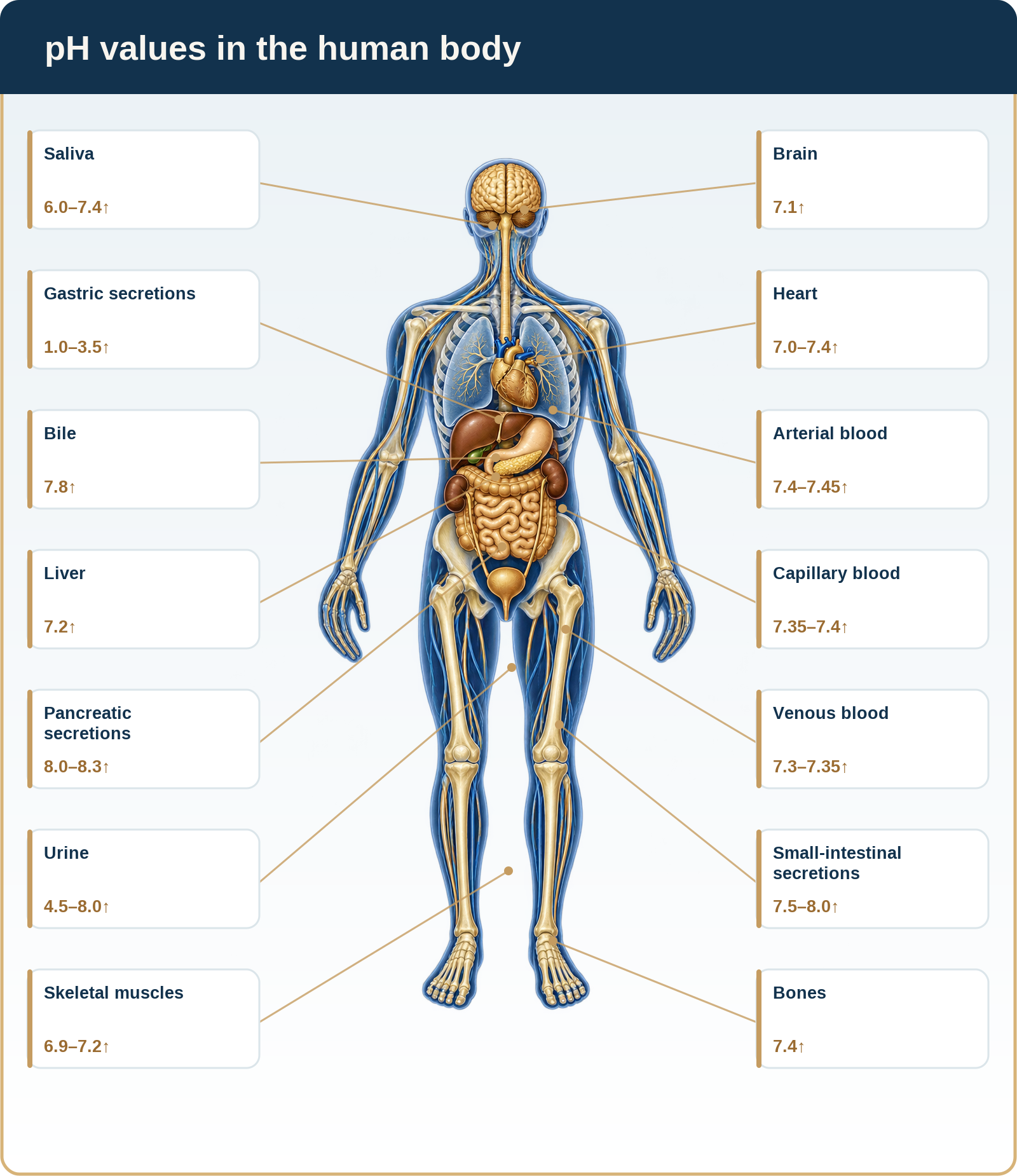
Fluids in the human body function by enabling digestion, lubrication, nutrient and oxygen transport, and protection. In order to fulfill these functions, acid levels must correspond to bodily functions.
 Enlarge image ↗
- Brain
- pH 7.1↑
- Saliva
- pH 6.0–7.4↑
- Gastric secretions
- pH 1.0–3.5↑
- Bile
- pH 7.8↑
- Liver
- pH 7.2↑
- Pancreatic secretions
- pH 8.0–8.3↑
- Urine
- pH 4.5–8.0↑
- Skeletal muscles
- pH 6.9–7.2↑
- Heart
- pH 7.0–7.4↑
- Arterial blood
- pH 7.4–7.45↑
- Capillary blood
- pH 7.35–7.4↑
- Venous blood
- pH 7.3–7.35↑
- Small-intestinal secretions
- pH 7.5–8.0↑
- Bones
- pH 7.4↑
General levels of acidity or alkalinity are measured on the pH scale and must be carefully monitored in every bodily fluid.
Body fluids and pH levels
Saliva, blood, and cerebrospinal fluid have a pH value of approximately 7.4. This nearly neutral value prevents tissue damage that could be caused by values at either end of the pH scale.
Proton pumps that regulate hydrogen ions in the stomach maintain a pH between 1.5 and 3.5. This strongly acidic fluid breaks down food and allows digestion to continue. Changes in either of these systems can lead to serious health problems.
When stomach acid exceeds the protective sphincter in the esophagus, heartburn and a sour taste can occur. The burning sensation is a result of acid damaging the tissue in the esophagus, further acidity can lead to irreversible changes and cancer.
Proper functioning of the valve depends on the level of acidity in the stomach.
How to properly measure the body's pH?
The pH can be checked most simply using indicator strips or an electronic pH meter.
Vaginal pH
For women, it is recommended to measure vaginal pH values using pH measurement applicators. With sufficient estrogen levels, the environment is acidic, and the pH (acidity) of the vaginal area ranges between 3.7 and 4.5.
A high pH value means that your estrogen levels have dropped, and thus the protection of the mucous membrane! The vaginal mucous membrane responds to various hormones, but it is more sensitive to estrogens. The resistance of the vagina to infections largely depends on the body's estrogen saturation. Estrogen in the female body is a condition for the development of beneficial bacteria.
Disease and acidity, which may indicate:
- Candidal vaginitis < 3.7
- Candidal vaginitis 4.5 – 5.0
- Trichomonas colpitis 5.0 – 6.0
- Bacterial vaginosis 4.5 – 7.0
- Atrophic vaginitis > 6.0
- Aerobic vaginitis > 6.5
Saliva pH
The ideal pH range for saliva for health is between 6.8 and 7.3. If everything is as it should be, without physical or mental problems, and if the body receives the appropriate amounts of minerals and bicarbonates, the morning saliva pH value measured immediately after waking will be around 7. The variation will be between a minimum value of 6.8 at six in the morning and a maximum of 7.5 at six in the evening.
If it happens that your saliva pH in the morning is approximately 6, but you feel completely normal, it is first necessary to check whether it might be a one-time occurrence. It is possible that you experienced strong stress or were extremely tired the day before, which can affect the result of the morning measurement.
It is, however, concerning if the pH value of saliva is low every morning without an obvious reason. It would be easiest to ignore this, as it does not hurt you and recent tests have not shown anything unusual. Despite tests and examinations showing nothing, some process is nonetheless taking place in the background.
What process is this?
It is about maintaining the key systems of the body within narrowly defined pH value limits.
How does the body achieve this?
It has limited options: either it takes alkaline minerals (such as potassium, sodium, calcium, and magnesium) from other parts of the body or it redirects acidic waste to less vital organs and tissues, primarily fatty tissues. It can also combine both approaches. None of these options is good.
A lack of minerals in the body has harmful effects. All these minerals are coenzymes - assistants to enzymes, and without them enzymes cannot function properly.
If the pH value of morning saliva measured over a week or two is around 7, this is a good sign and there is no particular reason for concern. Nevertheless, it is also recommended to measure the pH of urine. The pH value of urine changes more throughout the day than the pH of saliva, as it is part of a "fast response" system whose main goal is the rapid removal of acidic waste.
Urine pH value
In a healthy body, the first morning urine is always very "acidic". All the acidic waste products that have accumulated overnight are removed, so the pH value is only 5.8. If everything is functioning as it should, the second measurement before breakfast will already show a value between 6.5 and 7.0. By evening, when electrolytes are released from food, this value can rise to 7.5 to 8.0. Therefore, the second morning urination gives a more accurate result regarding your pH. The best time to measure pH during the day is one hour before a meal and two hours after it.
The normal process of our metabolism is accompanied by the formation of uric acid, which must be excreted from the body. A low pH value leads to the crystallization of uric acid, especially in the joints, from which gout (gout) and arthritis arise. If you look at the diet prescribed for gout (gout), you will notice that it is alkaline, because only in this way can we contribute to the dissolution of crystals.
At low pH, the body simply does not absorb many essential minerals. Iodine, selenium, and zinc are extremely important both for prevention and treatment, however, at a pH value below 6.4, regardless of how much we consume, they are simply excreted. If the pH value drops even lower, into a more acidic environment, pH 5.5 becomes an insurmountable barrier for the absorption of most minerals, trace elements, and vitamins (A, B, E, F, K). At values below 5.0, almost nothing is absorbed. The threshold pH value for the absorption of certain elements (sodium, calcium, and magnesium) begins at a value of 5.5. Enzymes also do not function in an acidic environment, especially proteolytic enzymes. Proteolytic enzymes, also known as proteases or peptidases, are enzymes that break down proteins. They function by breaking the peptide bonds between amino acids in protein molecules. These enzymes are key for many processes in the body, including the digestion of proteins in the digestive tract.
The situation is no better for fatty tissue. Not only does an acidic environment greatly slow down the metabolism of fat cells, making it difficult to eliminate fat, but fat also accumulates in the tissues and becomes a kind of incubator for many pathogens. Such an environment is ideal for their rapid reproduction.
What is better for the body – an alkaline or an acidic environment?
When we experience sour belching after a meal, we usually first assume that there is too much acid in the stomach. We may therefore take, for example, baking soda to neutralize it. In fact, symptoms such as belching after eating, heartburn and digestive disturbances are signs of an overly alkaline environment in the stomach. When the stomach is too alkaline, the upper sphincter does not close properly, allowing some acid to escape. Apple cider vinegar or lemonade can balance stomach acidity so that the upper sphincter functions properly. Effective action of enzymes throughout the digestive tract, including lipase, amylase and protease, depends on proper digestion of food in an acidic environment.
Frequency therapies with Zapper-Pro
Imbalances in the body's acid–base balance can be effectively regulated using frequency therapies with Zapper-Pro and by incorporating hydrogen water into our daily routine. Frequency therapies are an exceptional support for a healthy lifestyle and balanced nutrition, as they help the body establish optimal functioning at the cellular level. In combination with a healthy lifestyle and a diet rich in alkaline foods, these methods can contribute to maintaining internal balance and a good sense of well-being. It is also crucial to listen to the signals our body sends us and proactively respond to them.
For the best and fastest effects on our health, it is crucial to approach our condition holistically. Drinking hydrogen water every day is warmly recommended, as hydrogen, the smallest atom, acts as one of the most powerful antioxidants. Discover why hydrogen is so important and how hydrogen water can help you at this link.
Acidemia, low blood pH, usually due to the accumulation of organic acids 490 Hz, 730 Hz, 800 Hz, 2.500 Hz, 132.600 Hz, 347.500 Hz, 377.650 Hz, 597.500 Hz, 775.950 Hz, 925.310 Hz
Acidosis [low pH of extracellular fluid] 490 Hz, 730 Hz, 800 Hz, 2.500 Hz, 132.600 Hz, 347.500 Hz, 377.650 Hz, 597.500 Hz, 775.950 Hz, 925.310 Hz
Alkalosis [poisoning with alkaline substances] 50 Hz, 750 Hz, 2.250 Hz, 72.500 Hz, 110.250 Hz, 379.930 Hz, 424.370 Hz, 561.930 Hz, 642.060 Hz, 978.050 Hz
Milk-alkali syndrome [high level of calcium in the blood, the body's acid–base balance becomes more alkaline] 120 Hz, 650 Hz, 25.090 Hz, 87.500 Hz, 125.320 Hz, 222.530 Hz, 479.930 Hz, 527.000 Hz, 667.000 Hz, 987.230 Hz
Diabetic (keto)acidosis [metabolic acidosis due to accumulation of ketone bodies in the blood and tissues] 150 Hz, 890 Hz, 1.700 Hz, 6.970 Hz, 12.890 Hz, 62.300 Hz, 429.700 Hz, 478.230 Hz, 895.000 Hz, 951.300 Hz
Helicobacter Pylori 70 Hz, 410 Hz, 730 Hz, 750 Hz, 7.500 Hz, 20.000 Hz, 57.500 Hz, 154.000 Hz, 225.520 Hz, 322.060 Hz
Gout [inflammation of the joints caused by the accumulation of uric acid salts] 70 Hz, 570 Hz, 730 Hz, 2.500 Hz, 50.000 Hz, 150.000 Hz, 427.500 Hz, 695.280 Hz, 750.000 Hz, 875.950 Hz
It is recommended to include supportive therapies aimed at internal organs plus the adrenal glands, as they enable optimal functioning of the entire system. For detailed information, click here.
The next step is therapies targeting meridians, with an emphasis on the stomach, large intestine, and small intestine. Do not forget to also explore the other meridians. Additional information is available here.
Supporting the organsThe main functions of hydrochloric acid in the stomach
- Hydrochloric acid denatures proteins. It breaks down the protein structure so that enzymes can later digest them. This is pepsin in the stomach, and trypsin and chymotrypsin in the intestine. The acid in the stomach is therefore the first agent for protein digestion. You can consume as much protein as you want, but if the acidity in the stomach is too low, the proteins will not be digested. The food will then ferment in the intestine, causing gas to form. If you do a coprogram of the stool and undigested proteins are found there, it indicates low stomach acidity and consequently significant problems in the intestine. (A coprogram is a laboratory test used to analyze the properties, composition, and presence of certain substances in the stool. The test is often used for diagnosing various intestinal diseases and disorders.)
- Enzyme production. Hydrochloric acid not only denatures proteins for further breakdown by enzymes, but also produces these same enzymes. It converts pepsin from its inactive form into its active form, provides an acidic environment in which these enzymes can function, and activates intestinal enzymes.
- Anti-parasitic protection. Without sufficient stomach acidity, you will often suffer from the presence of pathogens in the body and especially in the intestines. When they enter the body, nothing except the stomach acid prevents them from continuing their path to other organs.
- Hydrochloric acid is necessary for the absorption of iron. Iron is needed for hemoglobin, which transports oxygen to cells. Cells can survive without food, but not without oxygen. If you have low iron levels in your body, first consider acidity. Without iron, anemia occurs, and the thyroid gland, which regulates many functions, is especially sensitive to it.
- Hydrochloric acid alleviates belching (GERD). An acidic environment closes the upper esophageal sphincter, even both sphincters. While the stomach is very acidic, it will be closed, but when the amount of acid decreases, the valves unlock and the stomach contents move up and down. In GERD, the worst thing you can do is to drink baking soda; it will indeed make you feel temporarily better, but then it will be much worse.
- It reduces the risk of esophageal cancer. At low acidity, the upper opening opens and the stomach contents enter the esophagus. The pH in the esophagus changes too much, and the cells die off.
- It protects against Helicobacter pylori. At low acidity, the bacterium comes to the surface, leading to exposed stomach lining, ulcers, and erosions.
- It protects against dysbiosis. Hydrochloric acid is the trigger for cascading digestive reactions throughout the entire digestive tract. Without acid, there are no other full digestive reactions. Food spoils, putrefactive flora develops, and the growth of normal microflora is inhibited.
- Properly directs calcium. At low acidity, calcium is not absorbed properly, it starts to deposit in soft tissues, cramps appear, your eyes twitch, the arteries suffer, and you become increasingly tired. If the acidity is normal, then calcium is properly absorbed, it goes where it belongs - into the bone tissue.
- Protects muscles, joints, and ligaments. At low acidity, proteins are not absorbed, so there is not enough building material for muscles, joints, and bones. Ligaments and tendons are torn, cartilage is damaged, and muscles are filled with fat.
The list can continue, I think many have realized that stomach acidity is very important. If it is at a low level, then there will be no normal digestion of food and consequently, further along the chain, other bodily functions will not function properly. However, with an increase in stomach acidity, on the contrary, we increase alkalinity in those organs where it is needed.
Foods that increase acidity or alkalinity
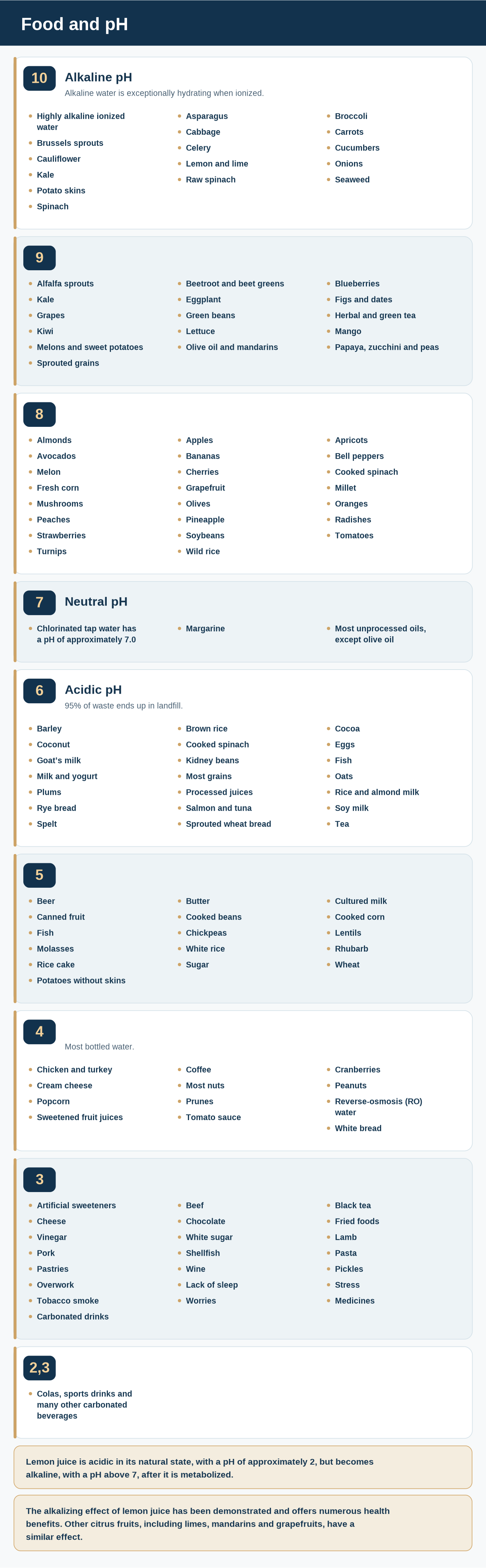
It is crucial to understand that the initial state of food is not important, but rather its final mineral state after the digestive process. The substance into which the raw materials will be converted in the body after processing will influence the pH of the body. For example, although they contain acids, lemon or apple cider vinegar slightly alkalize our body.
 Enlarge image ↗
pH 10 Alkaline pH
Alkaline water is exceptionally hydrating when ionized.
- Highly alkaline ionized water
- Asparagus
- Broccoli
- Brussels sprouts
- Cabbage
- Carrots
- Cauliflower
- Celery
- Cucumbers
- Kale
- Lemon and lime
- Onions
- Potato skins
- Raw spinach
- Seaweed
- Spinach
pH 9
- Alfalfa sprouts
- Beetroot and beet greens
- Blueberries
- Kale
- Eggplant
- Figs and dates
- Grapes
- Green beans
- Herbal and green tea
- Kiwi
- Lettuce
- Mango
- Melons and sweet potatoes
- Olive oil and mandarins
- Papaya, zucchini and peas
- Sprouted grains
pH 8
- Almonds
- Apples
- Apricots
- Avocados
- Bananas
- Bell peppers
- Melon
- Cherries
- Cooked spinach
- Fresh corn
- Grapefruit
- Millet
- Mushrooms
- Olives
- Oranges
- Peaches
- Pineapple
- Radishes
- Strawberries
- Soybeans
- Tomatoes
- Turnips
- Wild rice
pH 7 Neutral pH
- Chlorinated tap water has a pH of approximately 7.0
- Margarine
- Most unprocessed oils, except olive oil
pH 6 Acidic pH
95% of waste ends up in landfill.
- Barley
- Brown rice
- Cocoa
- Coconut
- Cooked spinach
- Eggs
- Goat’s milk
- Kidney beans
- Fish
- Milk and yogurt
- Most grains
- Oats
- Plums
- Processed juices
- Rice and almond milk
- Rye bread
- Salmon and tuna
- Soy milk
- Spelt
- Sprouted wheat bread
- Tea
pH 5
- Beer
- Butter
- Cultured milk
- Canned fruit
- Cooked beans
- Cooked corn
- Fish
- Chickpeas
- Lentils
- Molasses
- White rice
- Rhubarb
- Rice cake
- Sugar
- Wheat
- Potatoes without skins
pH 4
Most bottled water.
- Chicken and turkey
- Coffee
- Cranberries
- Cream cheese
- Most nuts
- Peanuts
- Popcorn
- Prunes
- Reverse-osmosis (RO) water
- Sweetened fruit juices
- Tomato sauce
- White bread
pH 3
- Artificial sweeteners
- Beef
- Black tea
- Cheese
- Chocolate
- Fried foods
- Vinegar
- White sugar
- Lamb
- Pork
- Shellfish
- Pasta
- Pastries
- Wine
- Pickles
- Overwork
- Lack of sleep
- Stress
- Tobacco smoke
- Worries
- Medicines
- Carbonated drinks
pH 2,3
- Colas, sports drinks and many other carbonated beverages
Lemon juice is acidic in its natural state, with a pH of approximately 2, but becomes alkaline, with a pH above 7, after it is metabolized.
The alkalizing effect of lemon juice has been demonstrated and offers numerous health benefits. Other citrus fruits, including limes, mandarins and grapefruits, have a similar effect.
- Consume foods high in protein and fat. This is a diet that mildly increases acidity. It is known as the keto diet, but there is also the Atkins diet, in which fats and proteins are used to obtain energy. During their breakdown, acidity slightly increases. Therefore, it is advisable to establish balance with alkaline foods, for example, vegetables. Consuming large amounts of protein and fat without vegetables is not beneficial.
- Diabetes mellitus. In diabetics, acidity is almost always increased.
- Sugar. Consuming products rich in sugar leads to increased acidity and raises insulin levels in the blood.
- Chronic stress. Despite the general belief, acidity increases in stressful situations. Chronic stress is often a result of improper functioning of the adrenal glands. When these glands do not function properly, more acids are excreted from the body, leading to increased alkalinity. Urine tests in such a condition show increased acidity, which is a result of excessive acid excretion, but in reality, increased alkalinity is present in the body.
- Age. As we age, the production of stomach acid decreases, leading to the alkalization of the body.
- Use of diuretics. This creates an overly alkaline environment in the body.
If the pH value of the blood falls outside the healthy range, this can lead to life-threatening consequences. Although alkaline foods have many beneficial properties, they are not directly related to the effect on the body's pH. These foods affect the pH of your urine, because our body removes any excess through urine to maintain pH balance.
It should be emphasized that our body has numerous mechanisms for precisely regulating pH balance, including various buffer systems, lungs, kidneys, liver, and other organs. It is of key importance that for the long-term and effective functioning of certain systems that compensate for acidity, we need reserves of base-forming minerals, such as potassium, sodium, calcium, and magnesium. Products rich in these minerals or individual supplements are recommended to be consumed daily. Our goal should be to maintain the natural acidity of gastric juice, as only this enables proper absorption of the base-forming minerals, which are crucial for regulating blood pH.
Sources for frequency lists
The source of the frequencies is ETDFL.com. The English edition of the frequency list is available free of charge at this link.
ETDFL frequency list on Zapper-Pro