Heart morphology
According to Traditional Chinese Medicine (TCM), the 'heart type' person is characterized by a strong, robust build, fuller lips, and a round face—one might picture someone like Santa Claus. These individuals are extroverted, loving, compassionate, and cheerful; they enjoy good food and are known for their jovial nature. 'Heart-type mothers' love to cook and often have large families. Physical touch is important to them. They tend to run hot and are 'early birds'; they often have round, rosy cheeks and sweat primarily on the upper body. They may be prone to weight gain and high blood pressure. Nevertheless, they rarely fall ill, as they possess abundant vital energy.
Maintaining order and discipline is difficult for them; consequently, a healthy lifestyle is often their weak point. A heart deficiency can lead to constipation and a sensation of irregular heartbeat. A further consequence of this deficiency is poor nutrient absorption in the small intestine. Thick blood poses a serious problem for the heart, so it is important for individuals with a heart-dominant constitution to consume foods that do not thicken the blood.
The Role and Function of the Heart
The heart is the core and the "king" of the body, serving as the seat from which energy radiates throughout our entire being. Through its dynamic nature, it regulates and influences activity in every part of us. The heart governs the pulse and the function of the blood vessels. It also acts as a bridge connecting all components of our system, including our personality. When the heart's energy rises to the brain, it functions as the mind; when it descends to the organs, it acts as a central point of balance within us.
The role of the small intestine
The small intestine is in harmony with the heart. The primary role of this organ is to receive and further break down food coming from the stomach. In the small intestine, the refined elements of food are separated from the coarse ones, allowing nutrient-rich fluids to be absorbed while the excess is passed on to the large intestine. When the Fire energy family functions optimally, we enjoy a stable and calm mind, a sharp memory, sensory clarity, restful sleep, and radiant skin. The heart expresses openness, empathy, and brightness. One could say that the heart is like a monarch who does not rule through force, but rather radiates joy, fosters harmony, and encourages connection.
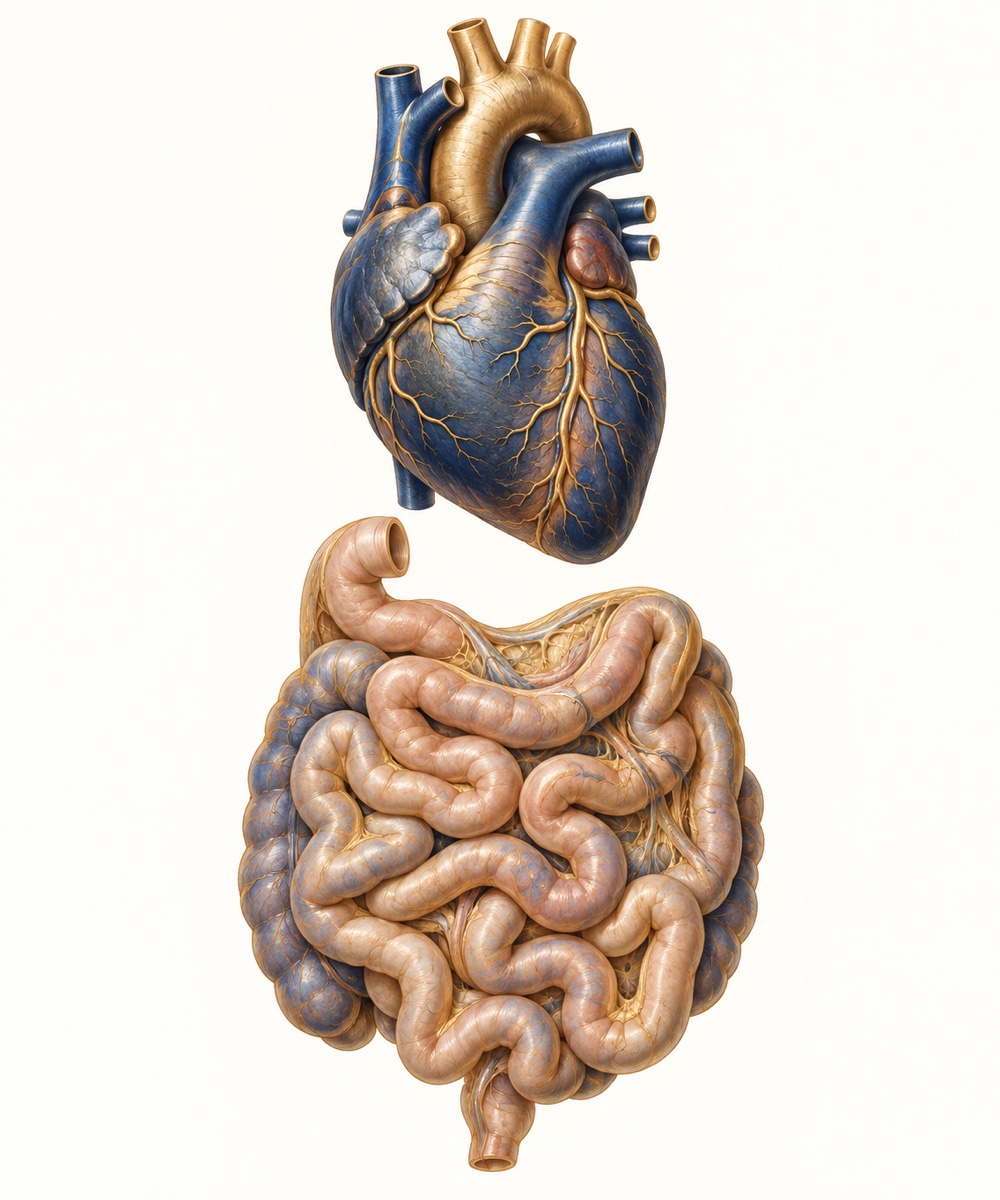
Overview of health issues related to the heart:
- Cardiovascular system issues:
Cardiovascular diseases • Chest pain • Arrhythmia • Poor circulation • Edema of the lower limbs • Excessively thick blood • Blood pressure (high or low) • Rushes of blood to the head • High blood pressure • Heart palpitations • Heart disorders, heart attack • Narrowing of blood vessels • Water retention
- Symptoms related to body temperature:
Sweating
- Mental Health Issues:
Psychosis • Schizophrenia • Anxiety • Restlessness • Panic attacks
- Communication and emotional disorders:
Communication and emotional expression disorders • Stuttering • Speech disorders
- Sleep problems:
Sleep Disorders • Insomnia
- Autoimmune Diseases:
Lupus
- Neurological Symptoms:
Dizziness • Vertigo
- Nutrition and metabolism issues:
Vitamin B12 deficiency • Obesity • Excess weight • Cramps
Connection between the heart chakra and the heart
The heart chakra, also known as Anahata, is the body's fourth major energy center and is located in the center of the chest. This chakra is directly connected to our heart center, where emotions, compassion, and love intertwine.
Heart Chakra symbolizes love for oneself and others, compassion, empathy and harmony. Physically, it is closely linked to the heart, lungs and thymus, which are essential to blood circulation, breathing and immune function.
Imbalances in the heart chakra can manifest as heart problems, hypertension, or respiratory issues. Emotional imbalance may express itself as difficulties in interpersonal relationships, a lack of empathy, or a sense of isolation.
The 639 Hz frequency can be used to balance and harmonize the heart chakra. This frequency helps raise the vibrational level of the heart chakra, which can lead to greater love, compassion, and inner peace.
Frequency therapy for the heart chakra can be administered via Zapper-Pro or via F-Gen. Find more information about this here.
The Concepts of YIN and YANG in Fire
The Heart and the Concept of YIN
In Traditional Chinese Medicine, the heart represents the Yin Fire phase, symbolizing the spark and vital warmth. Yin signifies stillness and negativity.
The Small Intestine and the Concept of YANG
The small intestine corresponds to the Yang Fire phase, representing vitality and metabolism. Yang symbolizes dynamism and positivity.
Characteristics of the Cardiac System
In Traditional Chinese Medicine, the heart is attributed with specific characteristics that reflect its role and importance in the human body.
Taste: A bitter taste is characteristic of the heart.
Color: The color palette of the heart system is red.
Emotions: Joy, pleasure, and delight are associated with the heart, though these can also manifest as impatience and arrogance.
Season and Direction: The heart is associated with summer and the south.
Time: The heart is most active between 11:00 a.m. and 1:00 p.m., while the small intestine is dominant between 1:00 p.m. and 3:00 p.m.
Related structures and organs: The heart plays a key role in many bodily functions. It is connected to organs and areas such as the small intestine, tongue, blood vessels, complexion, outer ear, corners of the eyes, blood, and sweat.
Laughter and joy can strengthen heart energy, yet an excess of them can deplete the heart. Symptoms of heart-related disorders include timidity, insomnia, muttering, dizziness, confusion, excessive sadness, and constant giggling. Since the heart is central to all functions, any ailment affecting it will quickly impact the entire body.
The Importance of the Time of Day for the Heart
Heart It is most active between 9:00 AM and 3:00 PM, corresponding to the morning hours and the summer season.
The summer months and the time between 9:00 AM and 3:00 PM are when the heart is most active. According to Traditional Chinese Medicine, summer begins on May 6 and ends on August 7. When the sun reaches its zenith at noon, it is the ideal moment for a meal. This peak of solar energy is a time for calming down and wrapping up morning tasks so that our energy does not run out.
The heart's active period—between 11:00 and 13:00—is a time for a brief rest and the replenishment of spiritual energy.
Every organ in the body has a specific time of day and year when it is most "open" and receptive to treatment. This is the time when its energy flows most strongly through the associated meridian, which remains active for approximately two hours. During this period, the organ "charges" with energy, while another organ—situated opposite it in the cycle—experiences its lowest energy point or "depletion". A balance is thus created: as one organ reaches its energy peak, the other is at its lowest point.
Frequency therapies to support the heart
With Zapper-Pro, the following ETDFL frequencies can be used for heart support:
70 Hz, 410 Hz, 700 Hz, 970 Hz, 2.750 Hz, 7.500 Hz, 15.310 Hz, 67.500 Hz, 115.700 Hz, 356.720 Hz
In addition to this basic therapy, the following treatments are recommended:
- small intestine support: 80 Hz, 240 Hz, 570 Hz, 2.500 Hz, 7.500 Hz, 12.050 Hz, 191.130 Hz, 254.080 Hz, 343.300 Hz, 639.180 Hz
- Heart meridian stimulation: 289 Hz
- Small intestine meridian stimulation: 316 Hz
More information on meridians and their frequencies can be found here.
The complete ETDFL frequency list is available free of charge as an e-book in English.
Free ETDFL frequency list→Conclusion and Sources
In our modern, fast-paced lives, we often overlook the importance of a fundamental organ like the heart, which plays a pivotal role in our overall health and well-being. Traditional Chinese Medicine, with its wealth of knowledge and millennia of practice, teaches us about the importance of balance and caring for our bodies. The heart is not merely a blood pump; it is also the home of our spiritual energy and the center of our emotions.
Caring for the heart—understanding its influence on our emotional state and using relaxation methods such as meditation and qigong—will contribute to improved general health, greater inner peace, and a better quality of life. In this context, combining ancient wisdom with modern approaches and technologies is crucial for holistic health and well-being. By caring for the heart, we care for the entire body and spirit, enabling us to lead a full, active, healthy, and high-quality life.
Sources:
- Simple – Health and Simple Solutions for 108 Ailments
- ETDFL.com
- Academy of Healing Arts, Diagnostics and nutrition based on Traditional Chinese Medicine (TCM)
- Erika Brajnik, Naturopathic Self-Help Manual