
Shingles or herpes zoster is a viral disease that causes itching, pain and a rash with clusters of blisters. The herpes virus causes chicken pox, but after recovery, it remains in the body and can reactivate. Shingles usually occurs in people over the age of 50 who have a weakened immune system and usually occurs on one side of the body along the nervous system.
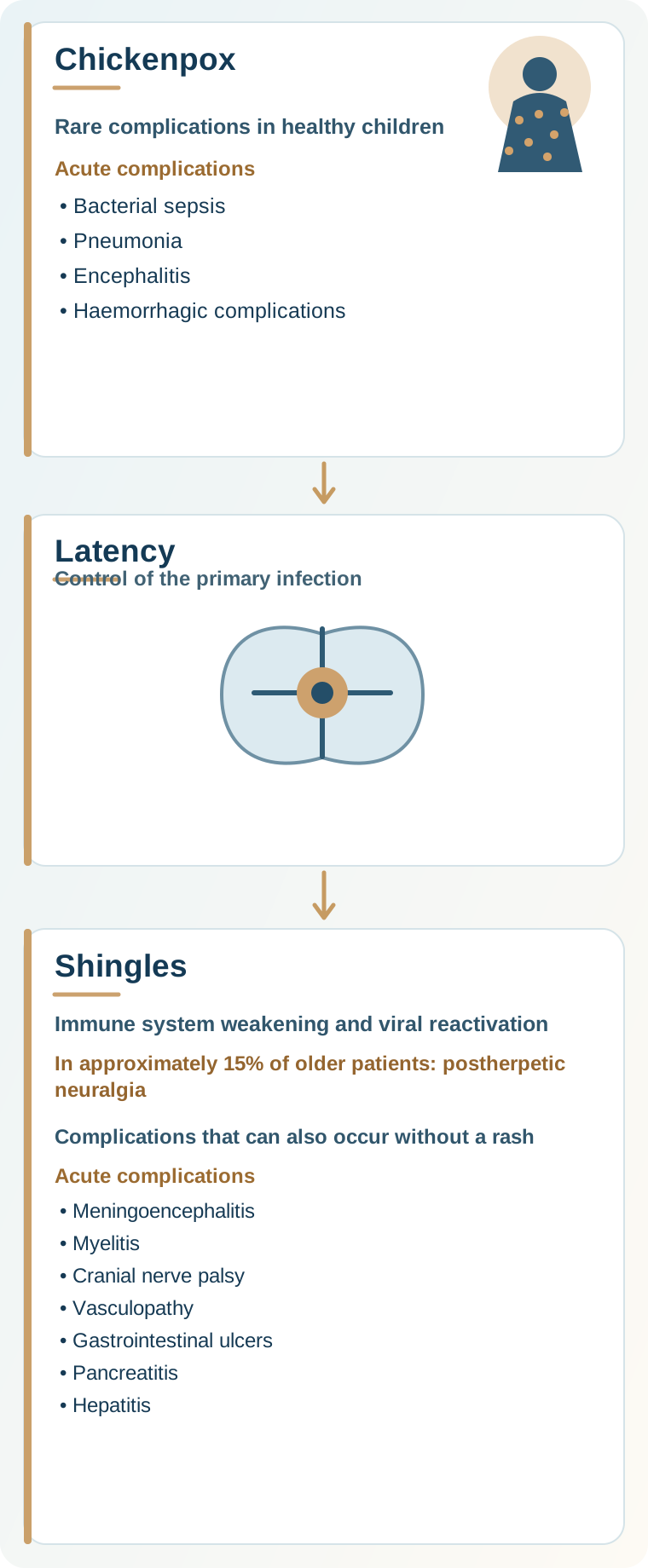
In patients with chronic liver diseases such as hepatitis B and C, shingles can cause more severe symptoms and serious complications. Chronic liver disease also increases the risk of developing shingles. Therefore, when treating shingles in patients with chronic liver disease, it is important to take special precautions and take into account possible limitations in liver function when choosing drugs.
Prevention is key. Patients with chronic liver disease should have regular liver tests and monitoring and avoid factors that may increase the risk of herpes virus reactivation. This can include lifestyle changes such as reducing stress, eating a healthy diet, avoiding alcohol and smoking, and exercising regularly.
Herpes Zoster
Treatment for shingles usually includes antiviral medications and pain medications that can help manage symptoms. Patients with chronic liver disease should be careful when choosing drugs to treat shingles and consult a doctor before treatment to check for possible limitations in liver function.
Accordingly, it is important for patients with chronic liver disease to have their liver tested and monitored regularly and to avoid factors that may increase the risk of herpes virus reactivation. In addition, before treating shingles, you should consult a doctor and avoid factors that can negatively affect liver function.
Herpes Zoster
Contrary to popular belief, the different types of herpes viruses are not necessarily limited to "their" locations - they can migrate to other parts of the body, although sores outside the usual location may not be as recognizable. Therefore, for example, if you have mouth ulcers, do not try oral genital contact, mistakenly believing that your oral herpes will not affect someone else's genital area - because you are wrong, and you can infect your partner! If one set of frequencies does not work, try other sets.
Diet is important in managing the herpes virus. Avoid grains, legumes (peas and beans), corn, chocolate, coffee, nuts, and seeds during active outbreaks. These contain large amounts of the amino acid arginine, which enables the virus to multiply. Adding lysines (an amino acid) can help by slowing down the growth of the virus. Also avoid fruit and sugar, which the virus uses to feed itself.
We recommend the use of Zapper-Pro for the following therapies. It is recommended to use the ETDFL frequency sheet as a first choice. You can find many programs for the liver at the following link: Liver and gallbladderLiver and gallbladder
Zoster or herpes zoster: 120 550 950 291.230 292.000 293.050 367.500 625.220 816.720 824.370
Herpes simplex type 1: 40 300 620 51.250 117.250 245.560 367.500 625.220 816.720 905.000
Herpes simplex type 2: 40 300 620 51.250 117.250 245.560 367.500 625.220 816.720 905.000
Herpes simplex encephalitis: 110 7.550 50.800 97.150 151.340 252.500 472.500 525.330 650.000 974.500
Herpes simplex, labial (a viral infection affecting the lips and the area around them): 110 550 900 5.580 27.500 245.560 367.500 625.220 816.720 905.000
Herpes virus, infections: 120 550 950 291.230 292.000 372.500 416.600 571.000 865.830 937.410
Herpes, Genital: 40 260 680 2.250 10.890 145.220 320.250 425.910 657.770 825.220
Geniculate Herpes Zoster: 120 550 950 291.230 292.000 293.050 367.500 625.220 816.720 824.370
Exanthema Subitum, Sixth childhood disease [acute infectious disease with rashes caused by herpesvirus. The infection is mainly transmitted through saliva]: 140 570 81.300 104.710 221.500 337.500 570.510 691.510 775.480 971.550
Regardless of what type of herpes you have, try general frequencies as well.
General frequencies 360, 361, 362, 363, 364, 365, 366, 367, 368, 369, 373, 528, 532, 540, 556, 665, 685, 716, 717, 718, 731, 732, 733, 776, 808, 832, 846, 848, 880, 888, 1402, 1488 (15 minutes), 1489 (30 minutes), 8778
General frequencies, short set 304, 464, 465, 802 + 1550, 1488 (15 minutes), 1489, 1577, 1900, 2950 (15 minutes)
General frequencies, set of single frequencies In the literature we find an attempt to set a single frequency for one hour, after which vitamin E was applied. They report a complete disappearance of herpes in a few days. 37000.
General frequencies for stubborn cases 20, 26, 120, 125, 200, 322, 343, 395, 420 to 480, 428, 444 + 1865, 476, 533, 554 to 556, 660 to 665, 660 + 690 + 727.5, 701, 745, 776, 787, 804 to 808, 822, 832, 843, 880, 1000, 1043, 1488 (15 minutes), 1500, 1552 to 1557, 1600, 1614, 1800, 1850, 1864, 2000, 2062, 2127.5, 2170, 2450, 2489, 2720, 3000, 5000, 8031
Herpes simplex 1 Frequencies for Herpes simplex 1, which is primarily used to treat cold sores and is also associated with cervical cancer. Herpes simplex 1 can also appear on the genitals. Frequencies that are close to each other are recommended, especially between 647 and 664. Except for frequency 2950, which is run for 20 minutes, each of the following frequencies is run for at least 6 minutes.
Try first: 2950 (minimum 20 minutes)
Then perform therapy with the following frequencies, every 6 minutes: 322, 339, 343, 467.8, 476, 480, 589, 591, 647, 648, 650, 651, 652, 653, 654, 655, 656, 657, 658, 659, 664, 699, 700, 734, 778, 782, 785, 822, 843, 847, 895, 9350.5, 944, 1043, 1488 (15 minutes), 1614, 1871, 2062, 3742, 5641, 7484, 8650
dr. Hulda R Clark: 291250 (lower limit), 292000 (most effective frequency), 293050 (upper limit of the same organism). 343350 (lower limit), 345500 (most effective frequency), 345760 (upper limit of the same organism)
14537.82, 17201.43
Herpes simplex 2 Frequencies for Herpes simplex 2, which are mainly used to treat genital sores and are also associated with cervical cancer. The virus can also appear in the mouth. It is recommended to use frequencies between 804 and 824 for at least 25 minutes, as all these numbers have been used to treat this type of herpes.
Additional frequencies: 532, 556, 804, 805, 806, 807, 808, 809, 810, 811, 812, 813, 814, 815, 816, 817, 818, 819, 820, 821, 822, 823, 824, 825, 832, 848
dr. Hulda R Clark: 353900 (lower limit), 355000 and 360000 (most effective frequency), 362900 (upper limit of the same organism). Use all these frequencies.
17923.34, 17674.41
Herpes simplex 2, multiple frequencies 360, 373, 528, 685, 540, 665, 716, 717, 718, 731, 732, 733, 776, 846, 880, 888, 1402, 8778
Herpes Virus Tie 3 / Herpes zoster / chicken pox / varicella / shingles The general public once knew this disease as chicken pox or varicella (the name of the microbe), which most often infects children and causes symptoms such as rashes, blisters and scabs on the skin. However, this virus also causes shingles, a very painful condition of inflamed nerves across the skin, and is also associated with Hodgkin's disease. A large proportion (25% or more) of people with Hodgkin's disease also suffer from Herpes virus type 3.
20, 26, 120, 304, 444 + 1865, 464, 574, 660 + 690 + 727.5, 664, 787, 800, 802 + 1550, 816.4 (5 minutes), 880, 914, 1500, 1552, 1557, 1600, 1633, 1800, 1864, 1865, 2127.5, 2170, 2720, 3000, 3176, 3343, 5000
Herpes Virus 4 (Human Herpes Virus 4) / Epstein-Barr Virus / Infectious Mononucleosis / Chronic Fatigue Syndrome (CFS) The virus causes a debilitating disease known by various names: Infectious Mononucleosis, Epstein-Barr Virus (EBV) and Chronic Fatigue Syndrome. Symptoms include extreme tiredness and weakness, fever, headache, nasal congestion, muscle aches and enlarged lymph nodes in the neck. Other symptoms include indigestion, weakness, memory impairment and difficulty thinking, sleep disturbances, irritability, anxiety and depression, sensitivity to heat and light, and recurrent respiratory infections. Children and young adults are more easily infected than adults and older people. Careful use of frequencies, thorough detoxification of the liver and strengthening of the immune system are recommended. Overcoming this disease can take a long time. Also watch out for the presence of candida, watch your blood sugar and pay attention to your thyroid function. Also check for anemia and possible silver poisoning from amalgam fillings.
First try: 1.1 + 73, 4.9, 6.3 + 148, 20, 27.5 + 220 + 410, 35, 72, 105, 172, 253, 274, 428, 465, 660 + 690 + 727.5, 663, 667, 669, 738, 744, 776, 778, 787, 825, 880, 1013, 1032, 1920, 2127.5, 6618, 8768 Also try: 95, 125, 330, 444 + 1865, 788, 802 + 1550, 1800, 2720, 10000
Herpes virus type 5 (Human Herpes Type 5) / cytomegalovirus (CMV) / salivary gland virus
This virus mainly affects very young babies and children, which is called Cytomegalic Inclusion Disease (CID). The virus is sometimes associated with neonatal death, premature birth or low birth weight, as well as infections of the kidneys, liver, lungs, pancreas, digestive tract, adrenal glands, thyroid and salivary glands, and central nervous system. The virus can remain in the body for a long time and sometimes manifests itself not only as anemia, but also as severe forms of cancer, such as leukemia and lymphoma.
126, 597, 629, 682, 1045, 2145, 8848, 8856 Dr. Hulda Clark: 20362.91, 1013.81 Dr. John Garvey: 12537, 41514, 47425, 47524, 48576, 48586, 48587, 48765
Herpes virus type 6 / Human Herpes type 6
It is not clear how type 6 manifests - new viruses are constantly being discovered - although new research suggests that women with breast cancer may have had this virus in them for some time before the tumors appeared. Medical research shows that "Epstein-Barr Virus / Infectious Mononucleosis / Chronic Fatigue Syndrome (CFS)" and "Herpes Type 6" are common in aggressive breast cancer.
228, 1820, 3640.1, 7281
Herpes type C
It is not clear how type C manifests itself - new viruses are constantly being discovered - although research suggests that people with cancer may have had this virus in them for some time before the tumors appeared.
395, 424, 460, 533, 554, 701, 745, 2450.
Some herbs are considered hepatoprotective, meaning they can help protect and restore the liver. Some examples of herbs that have hepatoprotective properties include:
- Common thistle (Silybum marianum), also known as milk thistle, is an herb known for its hepatoprotective properties. Thistle's effectiveness in protecting the liver is due to the presence of flavonoids called silymarin, which have antioxidant properties and can help protect the liver from the harmful effects of toxins and other toxic substances. Silymarin may also reduce inflammation in the liver and improve liver function in people with chronic liver disease. Common thistle is often used as a dietary supplement and is available in capsule, tablet and liquid form.
- Turmeric Turmeric (Curcuma longa) is a spice that is often used in traditional medicine, including for the treatment of liver diseases. Curcumin, the main component of turmeric, has antioxidant and anti-inflammatory properties that can help reduce oxidative stress in the liver and improve liver function. Studies have shown that curcumin can reduce inflammation and fibrosis in the liver and reduce liver enzyme levels in people with chronic liver disease, such as hepatitis and cirrhosis. In addition, curcumin can improve digestion and bile function, which can help eliminate toxins and other waste products from the liver. Turmeric can be consumed as a spice in food or as a dietary supplement.
- Ginger (Zingiber officinale) is an herb that has been used in traditional medicine for centuries to treat digestive disorders, including liver disorders. Research has shown that ginger can reduce inflammation in the liver and improve liver function in people with chronic liver disease. Ginger also contains antioxidants and anti-inflammatory substances that can help reduce oxidative stress in the liver. In addition, ginger can improve digestion and stimulate the secretion of bile, which can help eliminate toxins and waste from the liver. Ginger can be consumed as fresh roots, ginger tea or a dietary supplement in the form of capsules or tablets.
- Reishi mushroom (Ganoderma lucidum) is a medicinal mushroom used in traditional medicine to strengthen the immune system and treat various diseases, including liver diseases. Reishi mushroom contains many compounds that have hepatoprotective properties, including antioxidants and anti-inflammatory compounds. Studies have shown that reishi mushroom can reduce inflammation and fibrosis in the liver and improve liver function in people with chronic liver disease. In addition, reishi mushroom can improve digestion and reduce the accumulation of fat in the liver, which can help prevent the development of liver disease.
- Milk reed or milk reed Milk reed (Sonchus oleraceus) is an herb widely used in traditional medicine to treat a variety of problems, including liver disease. Milk reed contains many bioactive compounds, including flavonoids, phenolic acids and carotenoids, which have hepatoprotective properties. Studies have shown that milkweed extracts can improve liver function and reduce liver inflammation in people with chronic liver disease. In addition, milk reed can help reduce cholesterol and triglycerides in the blood, which can reduce the risk of developing liver disease. Milk reed can be consumed as part of the diet or as a dietary supplement in the form of capsules, tablets or tea.
- Red root (Salvia miltiorrhiza) is a medicinal plant used in traditional Chinese medicine to treat a variety of ailments, including liver disease. Red root contains many bioactive compounds, including tanshinones, which have hepatoprotective properties. Studies have shown that red root extracts can improve liver function and reduce liver inflammation in people with chronic liver disease. In addition, red root can reduce the accumulation of fat in the liver and improve lipid metabolism, which can help prevent the development of liver diseases.
- Licorice root (Glycyrrhiza glabra) is a medicinal plant traditionally used to treat various ailments, including liver disease. Licorice contains compounds that have anti-inflammatory and hepatoprotective properties. Studies have shown that licorice can reduce liver inflammation and improve liver function in people with chronic liver disease. In addition, licorice can also reduce the accumulation of fat in the liver and improve lipid metabolism, which can help prevent the development of liver diseases.
- Garlic Garlic (Allium sativum) is a plant that has various useful properties, including hepatoprotective effects. Studies have shown that garlic can reduce the accumulation of fat in the liver and improve lipid metabolism, which can help prevent the development of liver diseases. Garlic also contains sulfur compounds such as allicin, alliin and allixin, which have antioxidant and anti-inflammatory properties. These antioxidants can help protect the liver from free radical damage that occurs during metabolism and other processes in the body. Garlic is also widely used as a natural antibiotic and has proven antibacterial, antiviral and antifungal properties. These properties can help prevent infections that can damage the liver.
- Artichoke (Cynara scolymus) is a plant that is often used as a dietary supplement to protect and improve liver health. It contains high levels of antioxidants that can help prevent liver cell damage caused by free radicals. In addition, artichoke can also help improve lipid metabolism in the liver and reduce fat accumulation. Artichokes contain compounds called cynarins, which can increase bile production and help remove toxins and waste from the liver. In addition, cynarins have also been shown to have anti-inflammatory properties that may help reduce inflammation in the liver. Research has shown that artichoke can reduce the risk of liver diseases such as liver cirrhosis, liver fibrosis and fatty liver. In addition, artichoke can help reduce cholesterol and triglyceride levels in the blood, which can reduce the risk of cardiovascular disease.
- Peppermint (Mentha x piperita) has many health benefits, including a beneficial effect on the liver. Peppermint oil is often used to relieve digestive problems, as it can help relax the muscles in the digestive tract and reduce pain and spasms. In addition, peppermint can also help improve liver health, as it contains substances that have anti-inflammatory and antioxidant properties. Studies have shown that peppermint essential oil can protect the liver from damage caused by certain toxins. Peppermint can also help detoxify the liver and improve liver function as it can stimulate the production of enzymes that help break down and remove toxins from the body.
Melissa
- Melissa (Melissa officinalis) is a plant that has been used for centuries to treat various health problems, including herpes simplex. Herpes simplex is a viral infection that causes sores on the lips, genitals or other parts of the body. Lemon balm contains compounds that can help relieve the symptoms of herpes simplex. Studies have shown that applying lemon balm in cream or lotion form to the affected area can reduce pain, itching, and redness. Lemon balm also contains antioxidants that can help repair and protect cells from harmful free radicals. In addition, lemon balm can help reduce inflammation, which can help reduce herpes simplex symptoms.
- Basil Basil (Ocimum basilicum) is also a well-known herb that has hepatoprotective properties and can help protect the liver. Research has shown that basil extracts can help reduce liver enzyme levels and improve liver function in people with liver disease. Basil is also rich in phytochemicals and antioxidants that can help reduce oxidative stress in the liver.
Piper kubeba
- Piper kubeba (also known as kubeb) is an herb used in traditional Chinese medicine to treat various liver and gastrointestinal diseases. Studies have shown that Piper kubeba extract can reduce inflammation and fibrosis in the liver, which can help treat liver diseases such as hepatitis and cirrhosis. Piper kubeba also contains antioxidants that can help reduce oxidative stress in the liver. However, it should be noted that studies on the effectiveness of Piper kubeba in the treatment of liver disease are still in their early stages, and more research is needed to better understand its effectiveness and safety in use.